How a Hearty Breakfast Sets You Up for the Best Sleep of Your Life

Photo by Photo by Denis on Unsplash on Unsplash
Most sleep advice points you toward the evening. Dim the lights. Cut the caffeine. Put your phone in another room. All solid suggestions, sure. But here's the thing nobody's telling you: the quality of your sleep tonight may have already been decided this morning — the moment you decided what to eat (or not eat) for breakfast.
It sounds like a stretch. Breakfast and sleep feel like they exist on opposite ends of your day, like two strangers who never cross paths. But your body doesn't see it that way. To your biology, breakfast and bedtime are part of the same 24-hour conversation, and what you say at 7 AM echoes all the way to midnight.
Your Body Runs on a Clock — And Breakfast Sets It
Your circadian rhythm is essentially your internal timekeeper. It regulates when you feel alert, when you get hungry, when your body temperature dips, and yes, when you start producing melatonin — the hormone that tells your brain it's time to wind down.
Here's what's fascinating: that clock doesn't just respond to light. It also responds to food. Research has shown that meal timing acts as a powerful "zeitgeber" — a German word scientists use to describe external cues that synchronize your internal clock. When you eat a substantial breakfast at a consistent time, you're essentially telling your body's systems, this is when the day starts. And when the day has a clear beginning, it also has a cleaner ending.
Skipping breakfast or eating something tiny and forgettable? That's like starting a road trip without programming the GPS. Your body spends the rest of the day trying to figure out where it is in time — and that confusion can show up as restless nights, trouble falling asleep, or waking up at 3 AM for no obvious reason.
Blood Sugar Stability Is the Unsung Hero of Good Sleep
Let's talk about blood sugar, because this is where breakfast's impact on sleep gets really concrete.
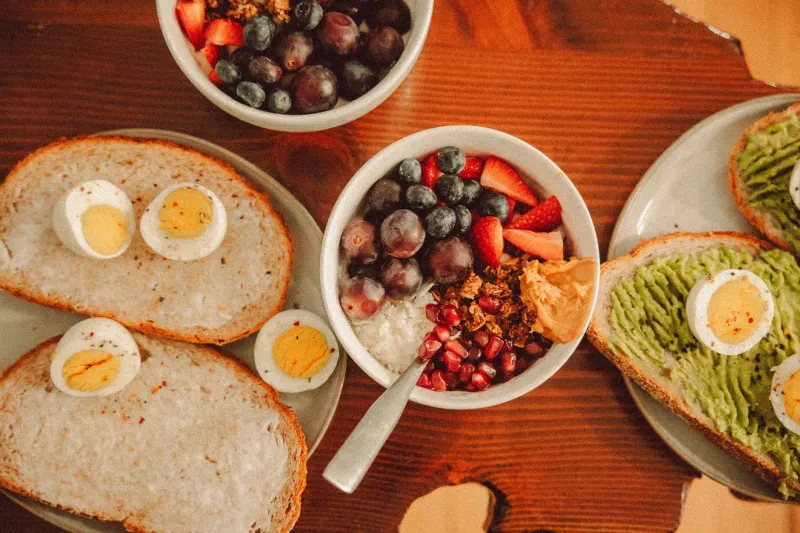
When you eat a balanced, protein-rich breakfast — think eggs with whole grain toast, Greek yogurt with berries, or a veggie-loaded omelet — your blood sugar rises gradually and stays stable for hours. That stability matters more than most people realize.
On the flip side, a skimpy breakfast (or none at all) can send your blood sugar on a roller coaster throughout the day. You might not even notice it consciously. But your body notices. Those dips trigger cortisol releases — your stress hormone — to bring blood sugar back up. Do that enough times throughout the day, and by evening your cortisol levels are still elevated when they should be falling. Elevated cortisol at night is basically kryptonite for melatonin production. The two hormones operate like a seesaw: when one is high, the other struggles to rise.
A hearty morning meal anchors the whole system. It reduces the need for those mid-day cortisol spikes and allows your stress hormones to follow their natural downward arc toward evening — which gives melatonin the runway it needs to take off.
The Tryptophan Connection You Probably Didn't See Coming
Here's a fun one. You've probably heard that turkey makes you sleepy at Thanksgiving — that's the tryptophan talking. Tryptophan is an amino acid that your body converts into serotonin, which then converts into melatonin. But what most people don't realize is that this conversion process takes hours.
If you want melatonin working for you at 10 PM, you need tryptophan in your system well before dinner. Eating tryptophan-rich foods at breakfast — eggs, dairy, nuts, seeds, oats — gives your body the raw materials it needs early in the day, so the conversion chain has plenty of time to complete before lights out.
This is one of those cases where breakfast is doing quiet, behind-the-scenes work you won't notice until you're already drifting off with unusual ease.
What a Sleep-Friendly Breakfast Actually Looks Like
You don't need to overhaul your entire morning. A few intentional choices can make a real difference.
Prioritize protein. Eggs, cottage cheese, smoked salmon, nut butter — protein slows digestion, keeps blood sugar steady, and delivers those tryptophan building blocks. Aim for at least 20–30 grams at breakfast.
Add complex carbs. Whole grains like oats, whole wheat toast, or quinoa help tryptophan cross the blood-brain barrier more effectively. Carbs aren't the enemy here — they're actually part of the sleep equation.
Don't skip the fat. Healthy fats from avocado, nuts, or olive oil slow the absorption of everything else, extending that blood sugar stability well into the afternoon.
Eat at a consistent time. This one's arguably the most important. Your circadian clock loves predictability. Eating breakfast within the same 30-minute window every day — even on weekends — strengthens the timing cues that regulate your entire hormonal rhythm, including sleep.
The Late-Night Snacking Trap (And How Breakfast Prevents It)
There's another angle worth mentioning: when you eat a filling breakfast, you're far less likely to find yourself raiding the kitchen at 9 PM. And late-night eating is one of the more reliable ways to wreck your sleep quality. Digestion takes energy, raises your core body temperature, and can trigger acid reflux — none of which are friends of deep, restorative sleep.
A robust morning meal essentially acts as an upstream intervention. It reduces hunger throughout the day, makes it easier to eat a reasonable dinner at a reasonable hour, and leaves your digestive system quiet and settled by the time your head hits the pillow.
Think of Breakfast as an Investment in Tonight
The way most of us think about food is pretty transactional — you eat, you feel full, done. But your body is running a much longer game. Every meal is a message sent forward in time, influencing hormones, energy, hunger, and yes, sleep hours down the road.
A brilliant breakfast isn't just about powering through your morning meeting or avoiding the 10 AM energy crash (though it helps with both). It's about setting a biological tone for the entire day — one that ends with you falling asleep easily, staying asleep deeply, and waking up ready to do it all over again.
So tomorrow morning, when you're tempted to grab a coffee and call it breakfast, remember: your 11 PM self is counting on the choice you make right now.