Cheap vs. Fancy Breakfast: A Brutally Honest Look at Where Your Money Actually Goes

Photo: Basile Morin, CC BY-SA 4.0, via Wikimedia Commons
The Morning Meal Price Tag Nobody Questions
Americans spend an estimated $100 billion annually on breakfast foods. That number includes everything from a fifty-cent packet of instant oatmeal to a $22 smoked salmon Benedict at a weekend brunch spot. And yet most of us rarely stop to ask: what am I actually getting for this money?
We default. We grab what's fast, or we splurge on weekends without really thinking about it. The $15 avocado toast gets mocked on personal finance Twitter, and the gas station breakfast sandwich gets quietly eaten in the car on the way to work. Neither choice gets much examination.
Let's change that.
First, Let's Define the Contestants
For this comparison, a "$3 breakfast" means a home-prepared meal using affordable, accessible ingredients — think eggs scrambled with whatever's in the fridge, a bowl of oatmeal with banana and peanut butter, or whole-grain toast with a couple of eggs. These are meals you can realistically put together in under ten minutes with pantry staples.
A "$15 breakfast" covers two scenarios: a restaurant or café order (avocado toast, a breakfast burrito, an açaí bowl, eggs Benedict) or a premium at-home version featuring specialty ingredients like smoked salmon, artisan bread, organic berries, or high-quality nut butters.
Both are legitimate. Neither is inherently better. But they're not equivalent — and knowing why they're different changes how you spend.
The Nutrient Math (It's Not What You Think)
Here's where the comparison gets genuinely interesting. When you break down breakfast options by nutrient density per dollar, the budget-friendly options often win — and sometimes win decisively.
Eggs are a classic example. A dozen large eggs at most US grocery stores runs between $2 and $4 (more for pasture-raised, but still reasonable). Two eggs deliver about 12 grams of complete protein, meaningful amounts of choline (critical for brain function), B vitamins, and healthy fats. Cost per serving: roughly $0.50 to $0.80. That's a hard nutritional value to beat at any price point.
Old-fashioned rolled oats are similarly punishing to expensive alternatives. A canister that costs $3 to $5 contains around 30 servings. Add a banana (about $0.20), a tablespoon of peanut butter ($0.15), and you've got a breakfast with complex carbohydrates, fiber, potassium, and protein for well under a dollar.
Now compare that to a $14 açaí bowl from a juice bar. Açaí itself does contain antioxidants and healthy fats, but many commercial açaí bowls are loaded with added sugars — from the granola, the honey drizzle, the sweetened coconut flakes. Some clock in at 60 to 80 grams of sugar. You're paying a premium for something that might actually undermine the productive morning you're going for.
That said, not every expensive breakfast is a nutritional con. A well-constructed smoked salmon plate with whole grain toast, capers, and a poached egg? Genuinely impressive nutritional profile — omega-3s, protein, healthy fats, complex carbs. You're paying more, but you're getting more.
The lesson: price and nutrition don't move together in a straight line. You have to look at what's actually in the meal.
The Time Economy of Breakfast
Money isn't the only currency here. Time is too — and this is where the restaurant breakfast starts making a different kind of sense.
A home breakfast takes time to plan, shop for, prep, cook, and clean up. If you're someone whose mornings are genuinely chaotic — early meetings, kids to get out the door, a commute that starts before 7 AM — a $12 breakfast sandwich from a café near your office might be a rational trade. You're not just buying food. You're buying twenty minutes of your morning back.
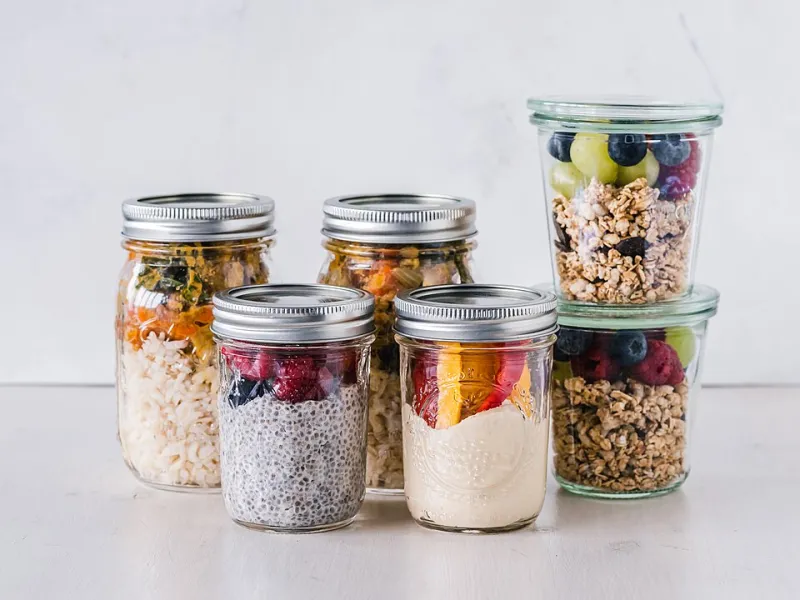
On the other hand, if you've built even a modest breakfast prep routine (something we're big on around here), the time argument for restaurant breakfasts weakens considerably. Prepping overnight oats or hard-boiled eggs on Sunday evening takes maybe fifteen minutes and covers five mornings. That drops your time cost per breakfast to almost nothing.
The honest calculation: what's your morning actually like? If you genuinely don't have time, spending more might save stress. If you do have time but feel like you don't, that's a routine problem, not a budget problem.
The Satisfaction Factor (And Why It's Legitimate)
Here's a thing that nutrition science sometimes undervalues: the psychological experience of a meal matters.
Research on eating satisfaction shows that how we feel about a meal — its presentation, the context we eat it in, whether it felt like a treat or a chore — influences satiety signals, stress levels, and even how much we eat later in the day. A beautiful breakfast eaten slowly and intentionally at a café table, with a good cup of coffee and no phone in hand, delivers something that a rushed bowl of cereal at the kitchen counter simply doesn't.
That's not snobbery. That's psychology.
So when someone spends $15 on a weekend breakfast out, part of what they're buying is a ritual — a deliberate pause before the week ramps up. If that pause genuinely reduces anxiety, improves mood, and sets a better tone for the day, it has real value that doesn't show up on a nutritional label.
The problem is when the expensive breakfast becomes the only way someone knows how to feel good about their morning. That's expensive dependency, not intentional spending.
A Framework for Spending on Breakfast With Intention
So how do you actually decide what your breakfast budget should look like? A few questions worth asking:
What are you getting for the premium? Better ingredients, saved time, a meaningful experience, or just aesthetics and branding? All of these can be valid — but know which one you're buying.
What's your weekday vs. weekend split? Many people do well with affordable, efficient breakfasts on weekdays and a slightly more indulgent or restaurant-based option on weekends. That's a reasonable system that honors both your budget and your desire for variety.
Are you paying for convenience you don't actually need? Pre-made smoothie packs, single-serve overnight oat cups, and branded breakfast kits often charge significant markups for things you could assemble yourself in five minutes. Convenience is worth paying for when you genuinely need it — not as a permanent default.
Does the cheaper option actually satisfy you? A $2 breakfast that leaves you hunting for snacks by 9 AM isn't as economical as it looks. Satiety is part of the value equation.
The Bottom Line
The $3 breakfast usually wins on pure nutritional value per dollar. Eggs, oats, whole fruit, and whole grain toast are among the most nutrient-dense foods available at any price, and they're cheap. If your goal is to fuel a productive, energized morning on a budget, you don't need to spend much.
But the $15 breakfast isn't automatically a waste. When it comes with genuinely better ingredients, meaningful time savings, or a psychological payoff that actually improves your day, it earns its price tag.
What doesn't serve you is spending on autopilot — either reflexively cheap because you feel guilty spending on yourself, or reflexively expensive because you've equated price with quality. The most brilliant breakfast choice isn't the cheapest or the fanciest. It's the one you made on purpose.