How Eating More at Breakfast Tricks Your Body Into Wanting Less Later

Here's something that doesn't quite add up on the surface: eat a larger breakfast, and you'll likely consume fewer calories overall by the time you're brushing your teeth at night. It runs counter to everything we've been told about portion control and calorie math. But researchers and registered dietitians keep arriving at the same conclusion — the morning meal is different, and the rules that apply to lunch and dinner simply don't translate.
So what's actually going on? And more importantly, how do you make it work for you without turning breakfast into a second dinner?
The Hormone Conversation Happening Without You
Every time you eat, your body launches a complex internal conversation between hormones, your gut, and your brain. Two of the biggest players in that conversation are ghrelin and peptide YY (PYY).
Ghrelin is your hunger signal — it spikes before meals and drops after you eat. PYY, on the other hand, is a satiety hormone released in your gut that tells your brain to pump the brakes on appetite. Here's where morning comes in: research published in the Journal of Nutrition found that a higher-calorie breakfast suppresses ghrelin more effectively than the same calories consumed later in the day. Your body is primed in the morning to respond to food in a way that genuinely dampens hunger for hours.
When you skip breakfast or eat something light and forgettable — a sad granola bar, a cup of coffee and nothing else — ghrelin stays elevated longer. By 10 or 11 AM, you're not just a little hungry. You're biochemically primed to overeat at lunch, grab something impulsive from the vending machine, and then wonder why you can't stop snacking after dinner.
Eating a real, substantial breakfast interrupts that cycle before it starts.
Size vs. Substance: A Distinction That Actually Matters
Here's where a lot of people go sideways with this idea: more breakfast doesn't mean more of anything. A stack of pancakes drowning in syrup is technically a large breakfast. It's also a blood sugar spike followed by a crash that'll have you raiding the office snack drawer by mid-morning.
What the research actually points to is nutritional density — the combination of protein, fiber, and healthy fat that creates lasting satiety. These three macronutrients slow digestion, stabilize blood sugar, and keep that PYY signal humming along well past your first cup of coffee.
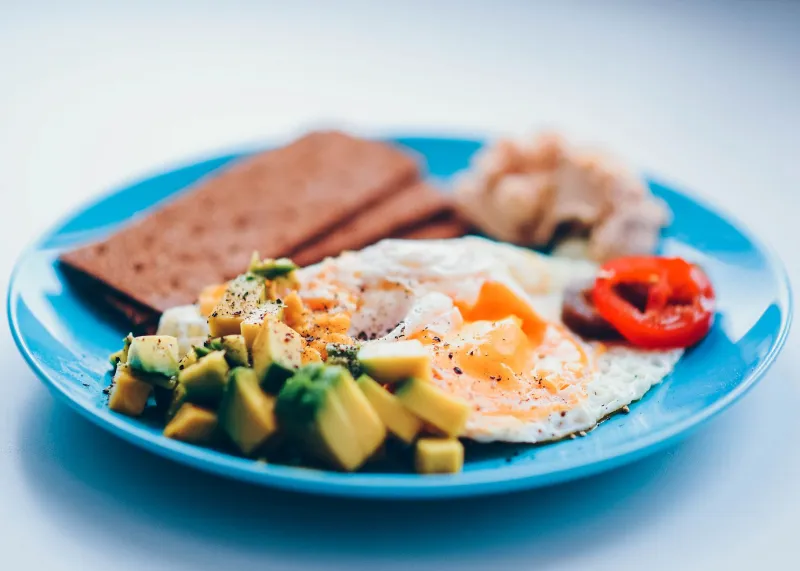
Think eggs with avocado and whole grain toast. A Greek yogurt parfait loaded with nuts and berries. A savory oatmeal bowl with a soft-boiled egg and some spinach stirred in. These aren't enormous meals by volume, but they're doing a lot of metabolic heavy lifting.
The goal isn't to stuff yourself — it's to build a breakfast that works efficiently. There's a meaningful difference between eating more and eating better, and that distinction is what makes this whole paradox click.
What Happens When You Flip the Pyramid
Most Americans eat light in the morning and heavy at night. It's practically cultural — a quick bowl of cereal or a drive-through sandwich on the way to work, then a big dinner as the social centerpiece of the day. But from a metabolic standpoint, that pattern is working against us.
Your body's insulin sensitivity is highest in the morning. That means the carbohydrates and calories you eat early in the day are processed more efficiently, converted to energy rather than stored as fat. By evening, that sensitivity drops. The same meal eaten at 7 PM lands differently than it does at 7 AM — and not in a good way.
A study out of Tel Aviv University put this to the test directly. Participants who ate their largest meal at breakfast lost more weight and reported lower hunger throughout the day than those who ate the same total calories but saved the bulk for dinner. The morning-heavy group also showed better blood sugar control and lower triglyceride levels. Same calories, different timing — dramatically different outcomes.
The Psychological Side of a Full Morning
Beyond the hormones and the metabolic timing, there's a psychological layer to this that's easy to overlook. When you start your day feeling genuinely nourished — not just caffeinated — your relationship with food throughout the day shifts.
Decision fatigue is real, and it hits food choices hard. By the time you've been at your desk for six hours, running on a light breakfast and two coffees, your ability to make thoughtful choices about what to eat is seriously compromised. That's when a fast food run or a bag of chips from the break room becomes the path of least resistance.
A satisfying breakfast doesn't just fill your stomach — it takes one stressor off your plate (literally) before the day has a chance to wear you down. You're not white-knuckling your way through the morning waiting for lunch. You're just... not that hungry. And that mental freedom is worth more than most people give it credit for.
Making It Work Without Overhauling Your Whole Morning
If your current breakfast routine is closer to "whatever I can grab in three minutes," a full nutritional overhaul sounds exhausting. But the shift doesn't have to be dramatic.
Start with protein. Even a modest increase — two eggs instead of one, Greek yogurt instead of flavored regular yogurt — can meaningfully extend satiety. Aim for at least 20-30 grams of protein at breakfast if you can.
Add fiber intentionally. Berries, chia seeds, oats, whole grain bread — fiber slows the absorption of everything else you eat and keeps you fuller longer. It doesn't take much to make a difference.
Don't fear fat. Half an avocado, a small handful of nuts, a drizzle of olive oil on your eggs — healthy fats are satiety superstars. They also help your body absorb the fat-soluble vitamins in whatever else you're eating.
Prep the night before. The biggest barrier to a better breakfast is time, not willpower. Overnight oats, hard-boiled eggs, pre-portioned smoothie ingredients in the freezer — five minutes of Sunday prep can change your entire week.
The Morning Meal as a Daily Investment
There's a certain elegance to the breakfast paradox once you sit with it for a minute. The meal we're most likely to rush, skip, or treat as an afterthought turns out to be the one with the most leverage over how we eat and feel for the rest of the day.
Eating more in the morning — the right kind of more — isn't indulgent. It's strategic. It's using your body's natural rhythms and hormonal patterns to set yourself up for a day where food is fuel, not a constant negotiation between hunger and willpower.
That's a pretty good return on a thirty-minute investment before 9 AM.